
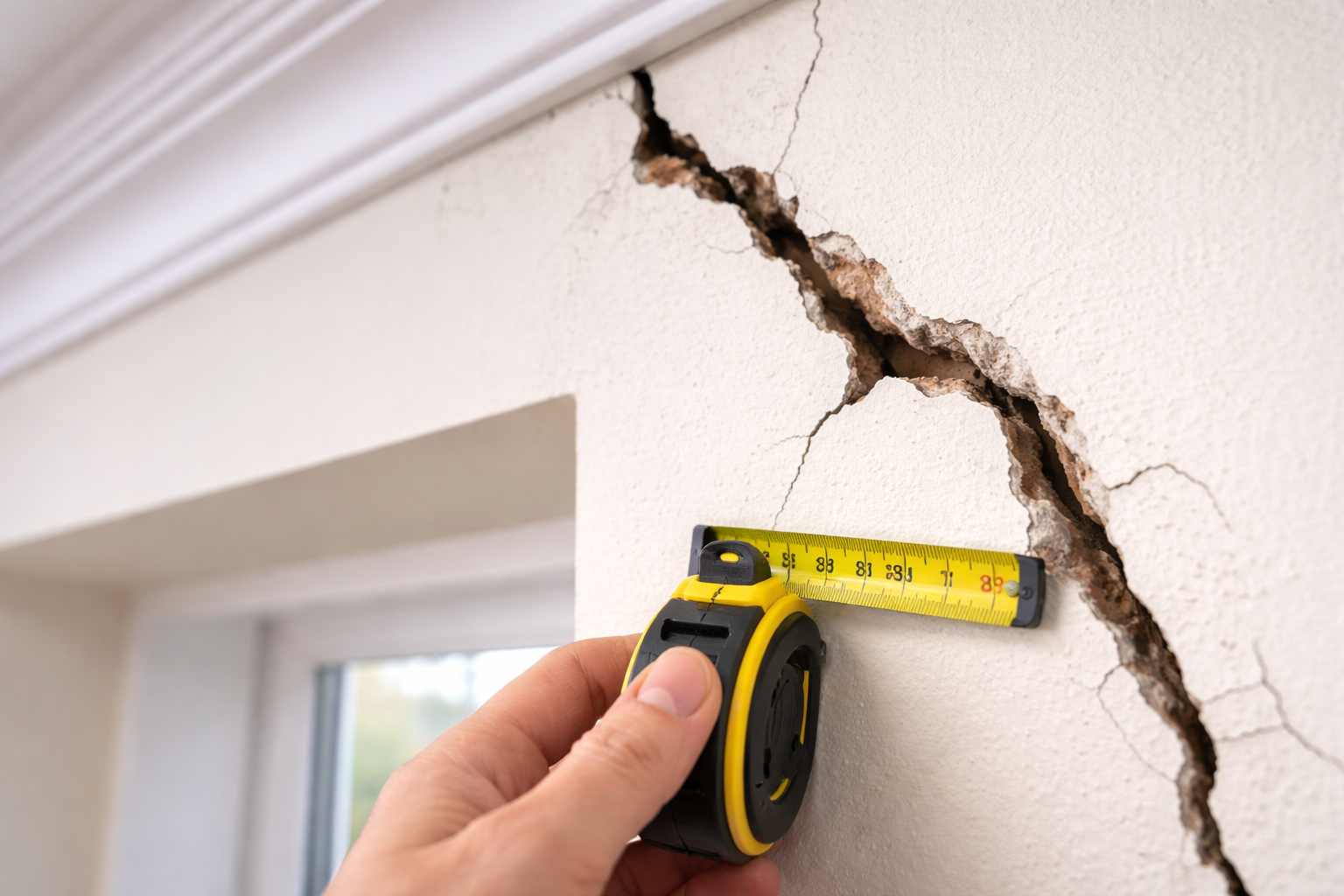
One of the main concerns surrounding building works covered by the Party Wall etc. Act 1996 is the risk of damage to neighbouring property. The legislation provides a structured process for dealing with damage claims where they arise and helps ensure matters are resolved professionally.
This guide explains how party wall damage claims are assessed and how the process works. Bloomsbury Surveyors advises building owners and adjoining owners across Brighton, Hove and Sussex on damage assessments and dispute resolution.
If you would like a wider overview first, visit our Party Wall Act Explained page.
What Is a Party Wall Damage Claim?
A party wall damage claim arises where an adjoining owner believes their property has been damaged as a result of building works covered by the Party Wall Act. The Act provides a framework for assessing whether damage has occurred and how it should be addressed.
This process is usually managed by the appointed party wall surveyor or surveyors.
Common Types of Alleged Damage
Not all damage is caused by building works, but concerns should always be assessed professionally. Common types of alleged damage include:
- Cracking to internal plaster
- Cracking to external masonry
- Movement around openings
- Damage to finishes
- Vibration related issues
- Minor decorative damage
Professional inspection helps determine whether the damage is related to the works or part of normal building movement.
The Importance of a Schedule of Condition
A schedule of condition is one of the most important documents in dealing with damage claims. This is a written and photographic record of the adjoining property prepared before works begin.
This provides a baseline condition so that any changes can be assessed fairly.
Read more on our Party Wall Awards Brighton page.
How Damage Claims Are Assessed
If damage is alleged, the party wall surveyor may inspect the property and compare the condition to the schedule of condition. They will consider whether the damage is likely to be related to the works.
This may involve:
- Property inspection
- Review of the schedule of condition
- Assessment of the type of damage
- Consideration of construction methods
- Professional judgement based on experience
What Happens If Damage Is Confirmed?
If damage is considered to be related to the works, the building owner is normally responsible for making good the damage or paying reasonable compensation.
The surveyors usually determine the appropriate approach based on the circumstances.
What If Damage Is Not Related to the Works?
Buildings naturally move and develop cracking over time. If damage is determined not to be related to the construction works, the building owner may not be responsible.
This is why professional assessment is important rather than relying on assumption.
Resolving Disputes About Damage
If there is disagreement about whether damage has occurred or how it should be addressed, the party wall surveyors may make a determination as part of the Party Wall Award process.
Where necessary, the third surveyor may also become involved.
Further guidance can be found on our Party Wall Dispute Resolution Brighton page.
Damage Concerns on Common Project Types
Damage concerns most often arise on projects involving structural work or excavation.
Examples include:
Preventing Damage Disputes
Many disputes can be reduced by following good procedure before works begin. Early surveyor involvement and clear documentation help reduce uncertainty.
This may include:
- Preparing a schedule of condition
- Serving correct notices
- Agreeing working methods
- Clear communication between parties
- Professional monitoring where appropriate
Why Professional Assessment Matters
Professional assessment helps ensure damage claims are handled fairly. This protects both building owners and adjoining owners and helps avoid unnecessary conflict.
Professional advice helps:
- Provide independent inspection
- Establish whether damage is related
- Provide fair recommendations
- Reduce unnecessary disputes
- Support resolution without escalation
How Bloomsbury Surveyors Can Help
Bloomsbury Surveyors advises clients across Brighton, Hove and Sussex on party wall damage claims. We assist with inspections, professional advice and dispute resolution where required.
Our aim is to provide clear, balanced advice based on professional experience and the requirements of the Party Wall Act.
Related Party Wall Pages
- Party Wall Awards Brighton
- Party Wall Dispute Resolution Brighton
- Starting Work Without Party Wall Notice
- Building Owner Party Wall Responsibilities
- Adjoining Owner Party Wall Rights
- Party Wall FAQs
Frequently Asked Questions
Who pays for party wall damage?
If the damage is caused by the works, the building owner normally pays for repairs or compensation.
What if I think my neighbour’s work caused damage?
You should seek professional advice so the situation can be assessed properly.
Does every crack mean damage from building work?
No. Buildings naturally move and not all cracking is related to construction works.
What if there was no schedule of condition?
The situation may still be assessed, but having a schedule usually makes the process clearer.
Do you assess damage claims in Brighton and Sussex?
Yes. We assist clients across Brighton, Hove and Sussex.