
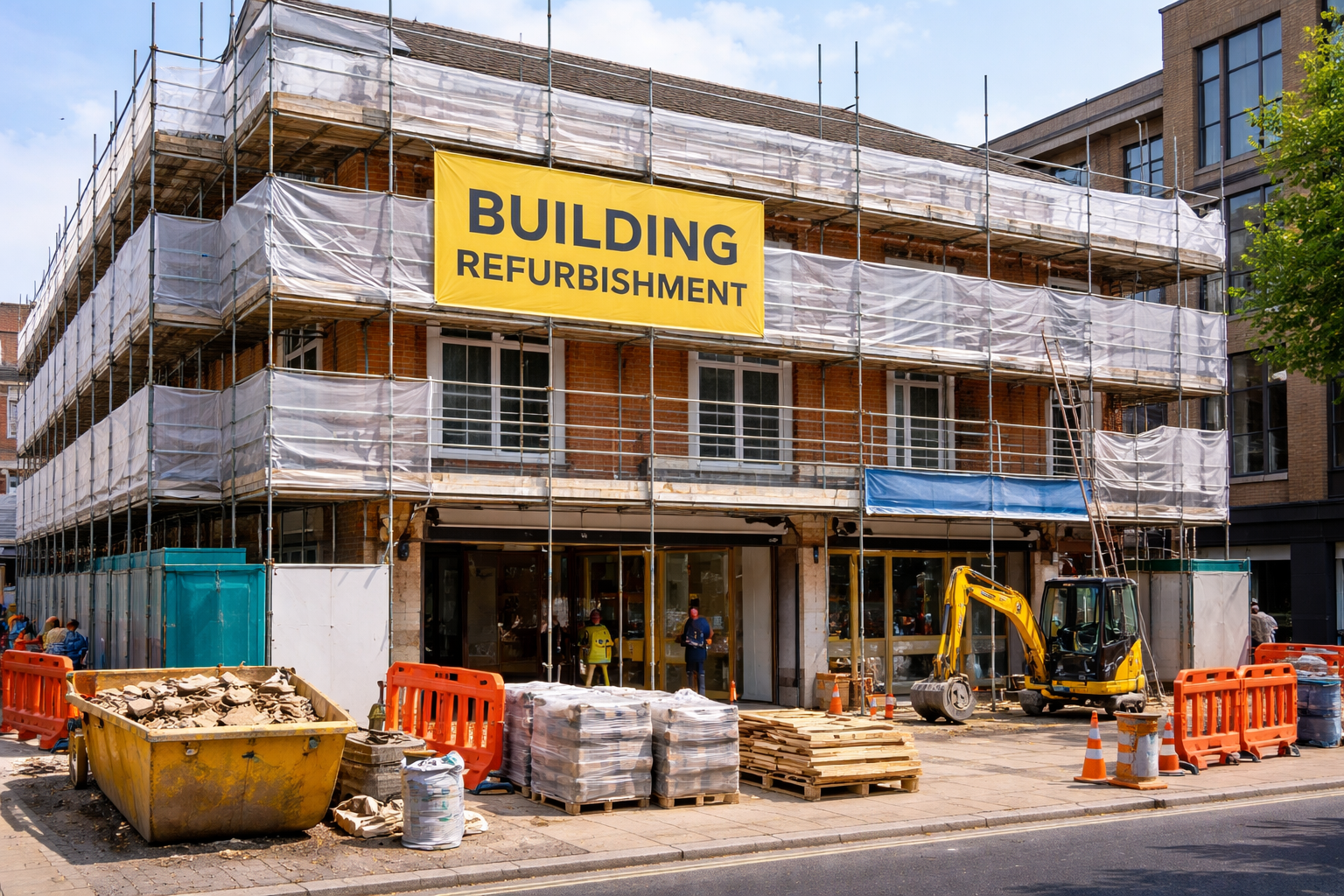
This case study shows how the Party Wall etc. Act 1996 can be applied on a larger commercial development where neighbouring structures, shared walls and construction risk required careful management. It demonstrates the value of early surveyor involvement, clear documentation and structured communication between parties.
Bloomsbury Surveyors advises developers, commercial property owners, adjoining owners and project teams across Brighton, Hove and Sussex on party wall matters affecting both domestic and commercial schemes.
Project Overview
This project involved the redevelopment of a commercial property where the proposed works included structural alterations, demolition elements and excavation close to adjoining buildings. Because neighbouring property could be affected, party wall procedures were required before the main works could proceed.
The scheme was more complex than a typical domestic project due to the number of stakeholders involved, the scale of the works and the technical coordination required.
The Initial Situation
The developer had progressed design information and the wider project team included architects, engineers and contractors. However, adjoining owners raised concerns about structural risk, access and the impact of the works on neighbouring property.
Given the scale of the development, it was important that the party wall process was handled professionally and integrated into the wider project programme.
Notice and Appointment Process
The relevant party wall notices were prepared and served on the adjoining owners. Some owners consented, while others dissented and chose to appoint surveyors under the Act.
This led to a structured surveyor process involving review of the proposed works, assessment of adjoining property risk and preparation of Party Wall Awards where required.
You can read more on our Party Wall Notice Guide page.
Technical Review of the Proposed Works
The surveyors reviewed the scheme in detail, including the structural proposals, excavation strategy and sequencing of the works. Particular attention was given to the likely effect on adjoining buildings and the practical measures required to reduce risk.
Commercial projects often require a more detailed level of review because they involve:
- More extensive structural alterations
- Greater excavation depth or complexity
- More than one adjoining owner
- Coordination with multiple consultants
- Higher value risk and commercial sensitivity
Schedules of Condition
Schedules of condition were prepared for the relevant adjoining properties before the main works began. These schedules recorded the visible condition of walls, floors, ceilings and other elements likely to be affected by vibration, structural movement or access arrangements.
This helped create clarity from the outset and reduced uncertainty if concerns were later raised during construction.
Party Wall Awards
The Party Wall Awards prepared for the development recorded the scope of the works, access arrangements, protective measures and procedures for dealing with any issues arising during the construction phase.
The awards included:
- Description of the proposed works
- Relevant technical information and drawings
- Access provisions where required
- Protective and procedural measures
- Schedules of condition
- Surveyor fee provisions
Read more on our Party Wall Award Explained page.
Construction Phase
Once the awards had been served, the project progressed in accordance with the agreed provisions. Because the party wall process had been handled early, the wider construction team had a clear framework for dealing with neighbouring property issues.
Throughout the build, communication remained structured and professional. Where queries arose, these were addressed through the surveyor process rather than escalating into broader dispute.
Outcome
The commercial development progressed successfully with the necessary party wall procedures in place. The structured approach helped reduce risk, maintain communication and support smoother project delivery.
This case demonstrated the importance of integrating party wall advice into the early stages of a commercial scheme rather than treating it as a late administrative task.
Key Lessons From This Case
This commercial case study highlights several important points:
- Commercial developments often involve multiple party wall issues at once
- Early surveyor involvement supports programme planning
- Clear technical review is essential on complex schemes
- Schedules of condition help reduce uncertainty
- Structured communication helps prevent escalation
How Bloomsbury Surveyors Can Help
Bloomsbury Surveyors advises on commercial party wall matters across Brighton, Hove and Sussex. We assist developers, landlords, commercial property owners and adjoining owners with notices, awards, schedules of condition and dispute resolution.
Our aim is to provide clear and practical party wall advice that supports project delivery while protecting neighbouring property and maintaining compliance with the Act.
Related Party Wall Pages
- Party Wall Advice Brighton
- Party Wall Act Explained
- Party Wall Awards Brighton
- Party Wall Dispute Resolution Brighton
- Party Wall Case Study Loft Conversion
- Party Wall Case Study Basement Excavation
- Party Wall FAQs
Frequently Asked Questions
Do commercial developments need party wall notices?
Yes, where the proposed works fall within the Party Wall etc. Act 1996.
Are commercial party wall matters more complex than domestic ones?
They often are because they may involve multiple owners, more extensive structural works and more technical coordination.
Can party wall issues delay a commercial project?
They can if not dealt with early, which is why integrating the process into the programme is important.
Do you advise on commercial party wall projects in Brighton?
Yes. We assist commercial clients across Brighton, Hove and Sussex.