
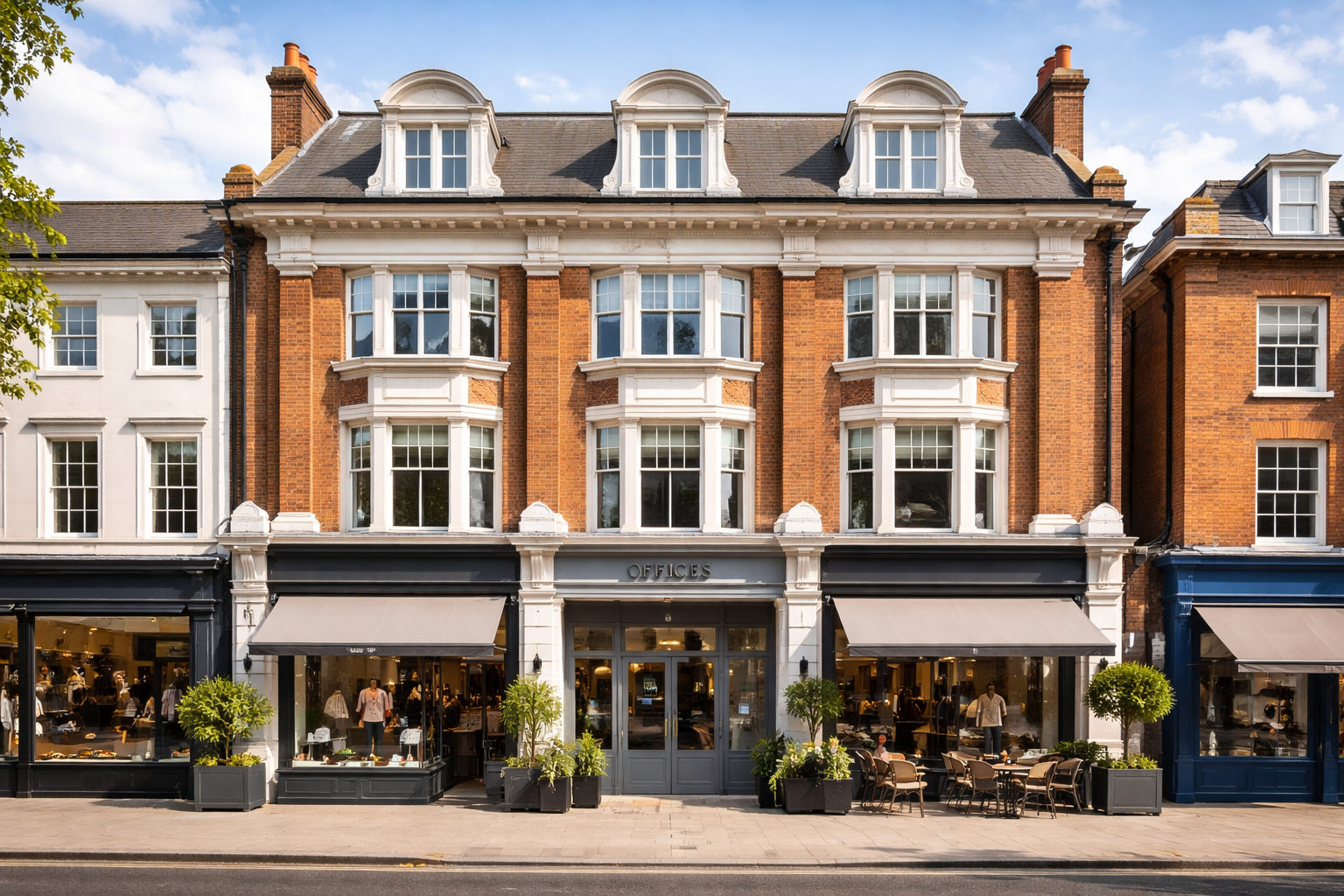
This case study shows how a commercial building survey helped identify condition risks and likely maintenance liabilities before a commercial property transaction progressed. Commercial acquisitions often involve more than just location and lease position. The physical condition of the building can materially affect value, repair exposure and future asset strategy.
Bloomsbury Surveyors provides building survey advice across Brighton, Hove and Sussex for commercial clients as well as buyers, owners, landlords and investors. This example shows how a survey can support better commercial decision making by identifying visible defects and putting them into practical context.
Property Background
The property was a commercial building in Sussex with mixed age elements and a visible pattern of wear consistent with long term use. The client was considering acquisition and wanted a clearer understanding of building condition, likely maintenance liabilities and any issues that might affect future budgeting or occupation planning.
As with many commercial properties, the issue was not one single visible defect but the combined effect of a number of condition concerns.
Why the Survey Was Commissioned
The client wanted professional advice before progressing further with the transaction. There were already signs of maintenance backlog, localised defects and some uncertainty around the condition of external elements and roof areas. The client needed clearer evidence to assess risk and plan realistically.
A commercial building survey was commissioned to provide a practical overview of visible condition and likely repair considerations.
Survey Scope
The survey focused on the visible condition of the commercial building, with particular attention to the external envelope, roof condition, moisture related symptoms, structural warning signs and general maintenance liabilities. The aim was to provide a report that helped the client understand where risk and cost exposure were likely to sit.
The survey considered:
- External walls and visible fabric defects
- Roof coverings and associated drainage elements
- Signs of water ingress or moisture related deterioration
- Visible cracking and structural concerns
- Condition of key accessible building elements
- General maintenance backlog and repair priorities
Key Issues Identified
The survey identified a number of visible defects that were relevant to the client’s acquisition strategy. These included roof related deterioration, defects in parts of the external envelope, localised moisture related concerns and evidence of ongoing maintenance burden that would need to be budgeted for.
Importantly, the report helped the client understand that the issue was not just isolated repair items but a wider pattern of deferred maintenance that would require structured attention.
Roof and External Envelope Concerns
One of the main themes of the survey was the condition of the roof and external envelope. Visible defects suggested that maintenance had been deferred in parts, increasing the risk of water ingress and further deterioration if action continued to be delayed.
For a commercial client, this was particularly important because roof and envelope defects can affect both repair budgets and operational continuity.
Related page:
Moisture Related Deterioration
The survey also identified visible signs consistent with moisture related building fabric deterioration. Rather than treating these as isolated internal symptoms, the report considered the wider relationship between external maintenance, weathering and condition of associated elements.
This helped the client understand where short term repairs might not be enough unless broader maintenance issues were also addressed.
Related page:
Structural and Defect Risk
Visible signs of cracking and local movement were also assessed. The survey placed these in context and explained where symptoms appeared likely to be part of the building’s age and use profile, and where further awareness was appropriate in future maintenance planning.
For the client, this meant the report supported practical risk assessment rather than creating unnecessary alarm.
Related pages:
Commercial Value of the Survey
The real value of the survey was not simply that defects were identified. It was that the report helped the client understand likely repair priorities, the probable scale of maintenance exposure and the practical implications for budgeting and asset management.
In commercial property, this kind of clarity is often essential because repair liabilities can affect investment returns, negotiation position and occupation planning.
Outcome for the Client
The client used the survey findings to review the transaction on a more informed basis. The report provided clearer visibility on likely repair needs and highlighted where allowances should be made for maintenance and future works.
Rather than proceeding on assumption, the client was able to assess the property more realistically and with better evidence.
Lessons From This Case
This case study highlights several important points:
- Commercial buildings often present cumulative maintenance risk rather than one single obvious defect
- Roof and external envelope condition can materially affect acquisition strategy
- Visible damp symptoms often need to be read in a wider building fabric context
- Structural symptoms should be interpreted professionally, not assumed
- A commercial survey helps turn condition risk into usable decision making information
Why Commercial Building Surveys Matter
Commercial transactions often move quickly, but building condition still needs to be understood properly. A survey helps buyers, investors and owners identify visible defects, assess maintenance exposure and make more informed decisions about acquisition, occupation or repair planning.
This is especially relevant where buildings are older, altered, mixed-use or showing visible signs of wear.
How Bloomsbury Surveyors Can Help
Bloomsbury Surveyors provides commercial building survey advice across Brighton, Hove and Sussex for investors, owners and occupiers who need clearer evidence about building condition. We help clients understand visible defects and likely repair liabilities so that decisions can be made with greater confidence.
Whether the concern relates to roof condition, external deterioration, structural symptoms or general maintenance backlog, we provide practical reporting tailored to the building and the client’s objectives.
Related Building Survey Pages
- Building Survey Advice Brighton
- Building Surveyor Sussex
- Property Defects Report Brighton
- Structural Survey Brighton
- Roof Defects Survey Brighton
- Building Survey FAQs
Frequently Asked Questions
Do commercial properties need surveys before purchase?
In many cases, yes. A survey helps identify visible condition risks and likely repair liabilities before commitment.
Can a commercial survey help with budgeting?
Yes. It can help clarify likely repair and maintenance priorities.
Are commercial building defects different from residential ones?
Some are similar, but commercial buildings often involve wider maintenance exposure and operational considerations.
Do you provide commercial building survey advice in Sussex?
Yes. We advise commercial clients across Brighton, Hove and Sussex.