
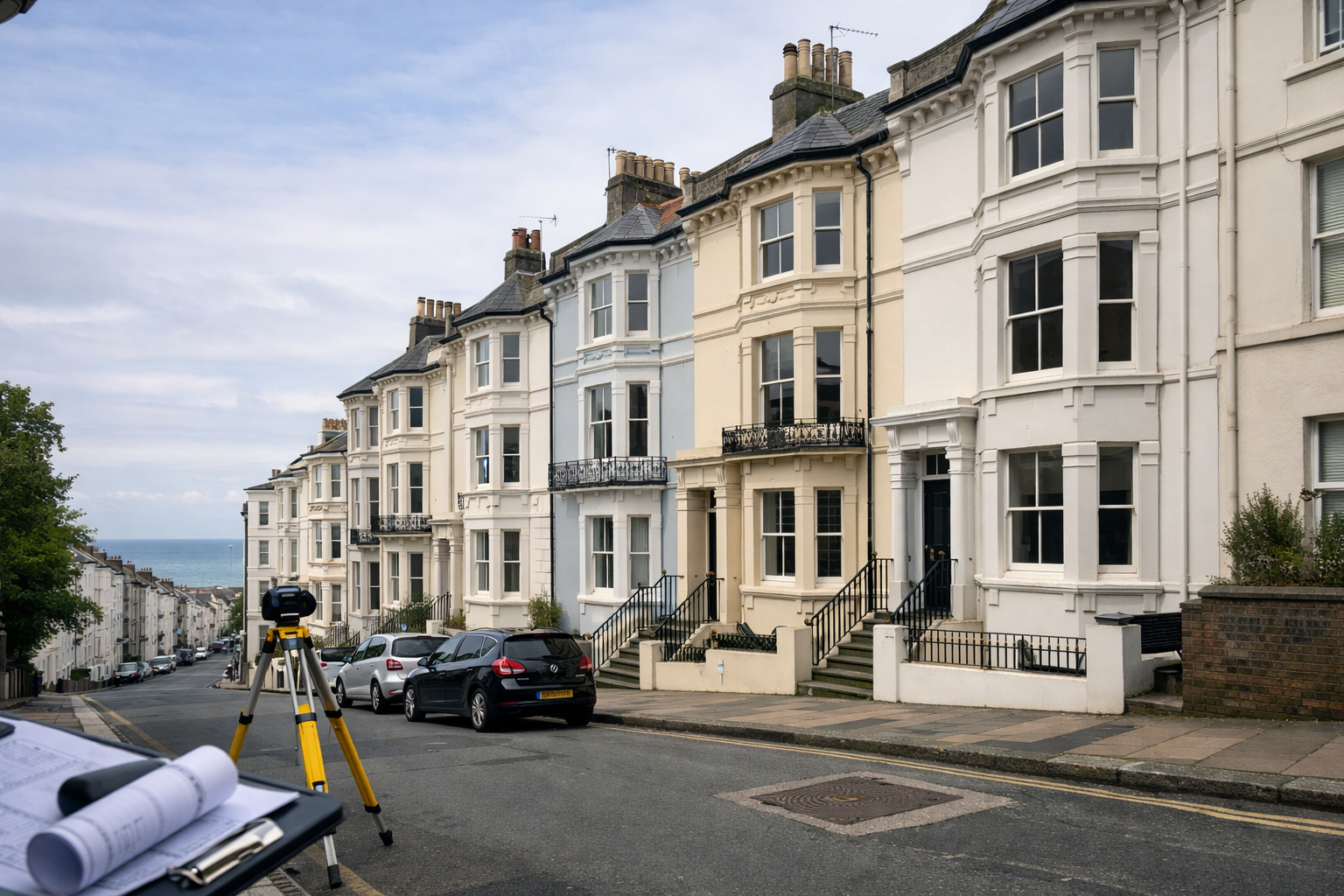
If you are buying, managing or maintaining property in Brighton, Hove or the wider Sussex area, professional building survey advice can help you understand a property’s true condition before problems become costly. From hidden defects and damp issues to cracking, roof problems and structural movement, a detailed survey provides clarity that photographs, estate agent details and surface level viewings rarely reveal.
At Bloomsbury Surveyors, we provide building survey advice in Brighton for homeowners, buyers, investors, landlords and commercial property clients. This page acts as the main knowledge hub for our building survey guidance, helping you understand when a survey is needed, what different reports include and how professional advice supports better decisions.
Whether you are considering a pre purchase survey, investigating defects in an existing property or trying to understand what type of building survey is right for your situation, this guide will help you navigate the key issues.
What Is a Building Survey?
A building survey is a professional inspection of a property carried out to assess its condition, identify visible defects and highlight risks that may affect value, safety, maintenance or future repair costs. The depth and style of the report depend on the type of survey commissioned, the age and construction of the building and the purpose of the inspection.
In simple terms, a building survey helps answer important questions before you commit money to a purchase or major works. It can reveal defects that are not obvious during a standard viewing and can help property owners understand where maintenance or repair attention is needed.
If you want a more detailed explanation, visit our What Is A Building Survey page.
When You May Need Building Survey Advice in Brighton
There are many situations where building survey advice is useful. Buyers often commission surveys before purchase so they can understand the true condition of a property before exchange. Owners may seek advice when signs of cracking, damp or roof failure appear. Investors may want clarity on likely repair costs before taking on a refurbishment project.
Common situations include:
- Buying an older property in Brighton or Hove
- Concerns about cracking or possible movement
- Damp, condensation or moisture related issues
- Visible roof defects or leaking
- Investigating structural concerns before major works
- Recording the condition of a property before construction or lease activity
- Understanding maintenance liabilities on an investment property
Professional advice is especially useful in Brighton and Sussex where many properties are period buildings, converted flats, terraces and coastal structures with complex maintenance histories.
Types of Building Survey
Different buildings and different circumstances require different levels of inspection and reporting. Choosing the correct survey matters because an overly basic report may miss important issues, while a more detailed survey may be the better option for older, altered or non-standard properties.
Common survey options include:
- Pre purchase surveys
- More detailed structural or condition focused surveys
- RICS survey formats such as Level 2 and Level 3 reports
- Schedule of condition surveys
- Specific defect investigations
You can read more on the following pages:
Why Building Surveys Matter Before Purchase
One of the most common reasons people seek building survey advice is before buying a property. A purchase is often made based on appearance, location and market pressure, but the condition of the building can have a major impact on future cost and enjoyment. A survey helps highlight issues before you become legally committed.
Typical problems discovered during pre purchase surveys include:
- Roof defects and failed coverings
- Damp penetration and timber decay
- Cracking and possible structural movement
- Poor past repairs or alterations
- Drainage issues
- Maintenance backlogs in period properties
For buyer focused guidance, visit:
- Pre Purchase Survey Brighton
- Buying House Survey Guide
- Survey Before Buying House
- Survey For Property Investors
Common Defects Found in Brighton Properties
Brighton and Hove contain a diverse range of buildings, including Regency and Victorian terraces, converted period buildings, coastal flats, commercial premises and later suburban housing. That variety creates a wide range of building pathology issues. Some defects are cosmetic, while others may indicate more significant repair needs or structural concerns.
Common issues found in Brighton properties include:
- Cracking linked to movement or historic settlement
- Coastal weathering and external fabric deterioration
- Damp penetration from defective rainwater goods or masonry
- Condensation and poor ventilation in converted flats
- Roof covering failure and flashing defects
- Timber decay in concealed areas
- Poor quality historic alterations
Our dedicated defect pages cover these topics in more detail:
- Property Cracks Survey
- Damp Survey Brighton
- Subsidence Survey
- Roof Defects Survey
- Property Defects Report
Period Property Risks in Brighton and Hove
Many Brighton and Hove properties are period buildings, and while these can offer significant character and long term value, they also come with greater inspection needs. Older buildings may have been altered many times over decades or centuries. Materials, construction methods and maintenance histories vary widely.
Period property risks may include:
- Hidden timber defects
- Solid wall moisture issues
- Roof spread or aging structural elements
- Historic cracking that needs interpretation
- Defective repairs using inappropriate modern materials
This is one reason why more detailed survey advice is often worthwhile before committing to purchase or refurbishment.
Structural Issues and Cracking
Cracking is one of the most common concerns raised by buyers and owners, but not every crack means serious structural failure. Some cracking is historic, some is seasonal and some is purely cosmetic. The important point is to understand the likely cause, significance and whether further monitoring or repair is needed.
Professional building survey advice can help distinguish between:
- Historic settlement
- Thermal movement
- Moisture related cracking
- Possible subsidence or progressive movement
- Defects linked to poor alterations
You can read more on our Structural Survey Brighton page and our Subsidence Survey page.
Damp, Timber and Moisture Problems
Damp issues are frequently misunderstood. Visible staining, mould growth or peeling finishes may have several possible causes, including penetrating damp, condensation, defective rainwater goods, poor ventilation or plumbing leaks. A good survey should look beyond the symptom and consider the likely source and building context.
In Brighton, coastal exposure and older building fabric can make moisture related defects especially relevant. Timber elements may also be at risk where prolonged moisture exposure has occurred.
Read more on our Damp Survey Brighton page.
Roof Defects and External Fabric Problems
Roof defects are another common issue, particularly in older or poorly maintained property. Slipped coverings, defective flashings, blocked rainwater goods and weathered junctions can all lead to significant internal problems if not identified early. External walls, chimneys and parapets may also require careful inspection, especially in exposed coastal conditions.
Professional survey advice can help identify priorities and distinguish between routine maintenance and more serious repair needs.
Read more on our Roof Defects Survey page.
Schedule of Condition and Property Protection
Not every survey is about purchase or defect diagnosis. In some situations, a schedule of condition survey is needed to record the state of a property at a specific point in time. This can be useful before nearby works, lease arrangements, access agreements or other situations where a formal record of existing condition helps reduce future dispute.
Read more on our Schedule Of Condition Survey page.
How Professional Survey Reports Help Buyers and Owners
A good building survey report is more than a list of faults. It should help the client understand what has been identified, how serious those issues may be and where action or further investigation may be appropriate. For buyers, this may affect negotiation, budgeting or the decision to proceed. For owners, it may inform repair planning and maintenance strategy.
Professional survey reports can help with:
- Understanding repair liabilities before purchase
- Prioritising maintenance works
- Budgeting for remedial action
- Identifying the likely cause of visible defects
- Providing clearer evidence for discussion with solicitors, agents or contractors
How Bloomsbury Surveyors Can Help
Bloomsbury Surveyors provides building survey advice in Brighton, Hove and across Sussex for residential and commercial clients. We assist property buyers, owners, landlords and investors with pre purchase surveys, defect reports, structural concerns and condition based advice.
Our approach is practical, professional and focused on helping clients understand property risk clearly. Whether you need a more detailed building survey, advice on cracking or damp, or a schedule of condition survey, we can help you identify the right next step.
Explore Our Building Survey Knowledge Hub
- Building Surveyor Brighton
- Property Surveys Brighton
- Pre Purchase Survey Brighton
- Structural Survey Brighton
- What Is A Building Survey
- Types Of Building Survey
- RICS Building Survey Guide
- Schedule Of Condition Survey
- Property Cracks Survey
- Damp Survey Brighton
- Subsidence Survey
- Roof Defects Survey
- Property Defects Report
- Buying House Survey Guide
- Building Survey FAQs
Frequently Asked Questions
What is the difference between a building survey and a mortgage valuation?
A mortgage valuation is primarily for the lender and is not a detailed condition report. A building survey is designed to help the client understand defects, condition and risk.
When should I get a building survey in Brighton?
It is usually best to commission a survey before exchanging contracts, especially on older, altered or higher risk properties.
Are building surveys worthwhile for period properties?
Yes. Period properties often carry greater defect risk and may benefit from more detailed inspection.
Can a survey identify structural movement?
A survey can identify visible signs of movement and assess likely significance, although further specialist investigation may sometimes be recommended.
Can a survey help with damp problems?
Yes. A building survey can identify visible moisture related issues and consider likely causes, although the scope depends on the inspection commissioned.
Do you provide building survey advice in Hove and across Sussex?
Yes. We provide building survey advice for Brighton, Hove and the wider Sussex area.