
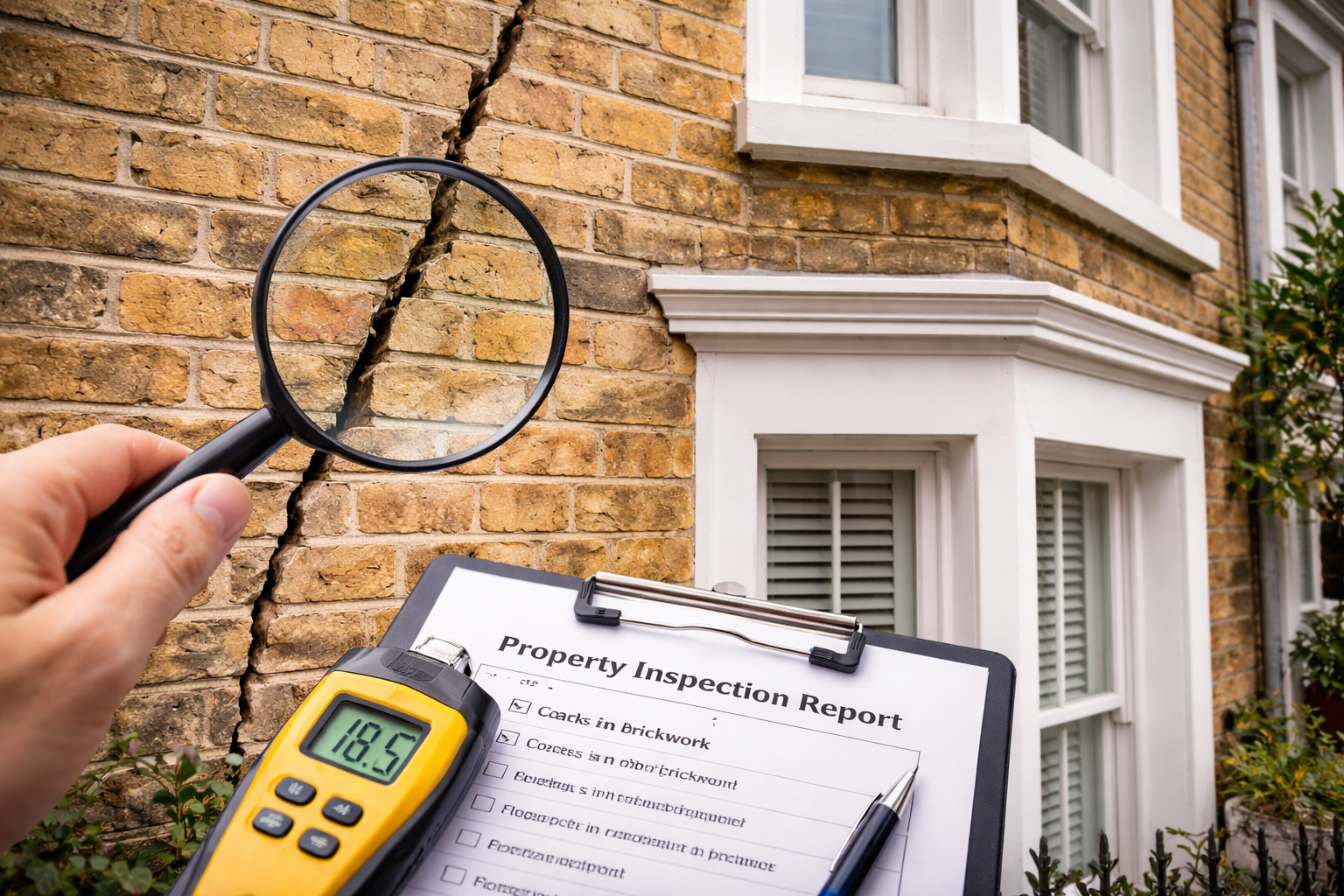
This case study shows how a building survey helped identify major visible defects before a property purchase proceeded. While many buyers focus on location, layout and presentation, the true condition of a building can only be understood properly through professional inspection. In this case, the survey helped reveal issues that materially affected repair planning and the buyer’s understanding of risk.
Bloomsbury Surveyors provides building survey advice across Brighton, Hove and Sussex for buyers, owners, landlords and investors. This example illustrates how a defect focused survey can turn uncertainty into evidence and help a client make a better informed decision.
Property Background
The property was an older residential building in Brighton that appeared generally attractive during viewings but showed a few signs of wear that raised concern. The buyer wanted to understand whether those signs reflected routine maintenance or more substantial condition problems before moving closer to exchange.
Because the building was older and visibly altered in places, a more detailed inspection was considered appropriate.
Why the Survey Was Commissioned
The buyer had concerns about several visible warning signs, including cracking, moisture related staining and the overall condition of parts of the exterior. There was also uncertainty around the standard of previous repair work and whether hidden costs might arise soon after purchase.
The survey was commissioned to provide a clearer assessment of the property’s visible condition and likely repair burden.
Survey Scope
The inspection focused on the overall visible condition of the building with particular attention to structural symptoms, damp related defects, external fabric deterioration and the likely effect of historic alterations. The aim was to identify significant defects and explain their likely practical implications for the buyer.
The survey considered:
- Visible cracking and movement signs
- Damp related symptoms and moisture risk
- Condition of external walls and finishes
- Roof and rainwater related observations
- Signs of poor previous repairs
- General maintenance liabilities
Key Defects Identified
The survey identified a number of defects that were more significant than the buyer had expected from the viewing alone. These included cracking that required contextual interpretation, evidence of moisture related deterioration, external maintenance defects and signs that some previous repairs or alterations had not been carried out to a consistently good standard.
Individually, some of these issues were manageable. Taken together, however, they materially changed the buyer’s understanding of likely repair exposure.
Cracking and Movement Concerns
Visible cracks were identified in several parts of the building. The survey assessed their likely significance in the context of the building age, construction type and pattern of the defects. This helped the buyer understand which signs appeared more likely to be historic and which issues needed closer attention in future maintenance planning.
The survey did not treat every crack as a major structural issue, but it also did not dismiss them without explanation. That balance was important for the client.
Related pages:
Damp and Moisture Related Defects
Moisture related symptoms were also noted, including visible staining and signs of building fabric deterioration. Rather than simply categorising these symptoms generically, the report explained likely contributing factors and the probable distinction between maintenance related issues and wider condition concerns.
This helped the buyer understand that the visible damp symptoms were part of a broader maintenance picture rather than an isolated cosmetic issue.
Related page:
External Fabric and Maintenance Backlog
The survey found that elements of the external fabric had deteriorated to a point where repairs should be anticipated. The issue was not one dramatic single defect, but a wider pattern of deferred maintenance. This is often how risk presents itself in older buildings. It is the cumulative repair burden, rather than one obvious failure, that matters most to a buyer.
The report helped the client understand that ownership would likely involve more immediate maintenance planning than originally expected.
Quality of Previous Repairs
Another important issue identified was the mixed standard of previous repairs and alterations. Some earlier works appeared to have been carried out without a consistently sympathetic or durable approach to the building fabric. This increased the risk that visible defects might recur or that later remedial work would need to undo earlier poor interventions.
For the buyer, this was valuable insight because these issues were not obvious from presentation alone.
Outcome for the Buyer
The buyer used the survey findings to reassess the transaction with a clearer understanding of likely repair exposure and ongoing maintenance commitment. The report provided enough detail to move the discussion from vague concern to specific evidence, which made it easier to evaluate the building realistically.
In cases like this, the value of the survey lies not only in identifying defects but in helping the client see the building as it really is rather than as it appears during a short viewing.
Lessons From This Case
This case study highlights several important points:
- Visible presentation does not always reflect underlying condition
- Multiple moderate defects can create substantial repair exposure when combined
- Historic cracking needs interpretation, not guesswork
- Moisture related issues are often part of a wider maintenance pattern
- Poor previous repairs can materially affect future risk and cost
Why Defect Focused Surveys Matter
Not every purchase needs the same style of survey, but where visible warning signs already exist, a more focused assessment can be particularly valuable. Defect focused reporting helps clarify what the symptoms are likely to mean and whether the building appears to carry a greater maintenance or structural burden than first assumed.
Buyer guidance pages include:
How Bloomsbury Surveyors Can Help
Bloomsbury Surveyors provides building survey advice in Brighton, Hove and across Sussex for buyers and owners dealing with visible defects, structural concerns and condition risk. We help clients understand what defects may mean in practical terms so that decisions can be made with clearer evidence and fewer surprises.
Whether the issue relates to cracking, damp, external deterioration or general maintenance backlog, we provide practical reporting tailored to the property and the reason for instruction.
Related Building Survey Pages
- Building Survey Advice Brighton
- Property Defects Report Brighton
- Structural Survey Brighton
- Damp Survey Brighton
- Roof Defects Survey Brighton
- Building Survey FAQs
Frequently Asked Questions
Can a survey uncover major defects before purchase?
Yes. A survey can identify visible defects and help explain their likely significance before you commit.
Are older Brighton properties more likely to show multiple defects?
In many cases, yes, particularly where maintenance has been deferred or previous repairs were poor.
Can a survey help with negotiation?
Yes. Survey findings can help buyers assess likely repair liability and negotiate more realistically where appropriate.
Do you provide defect focused survey advice in Brighton?
Yes. We provide building survey advice across Brighton, Hove and Sussex.