
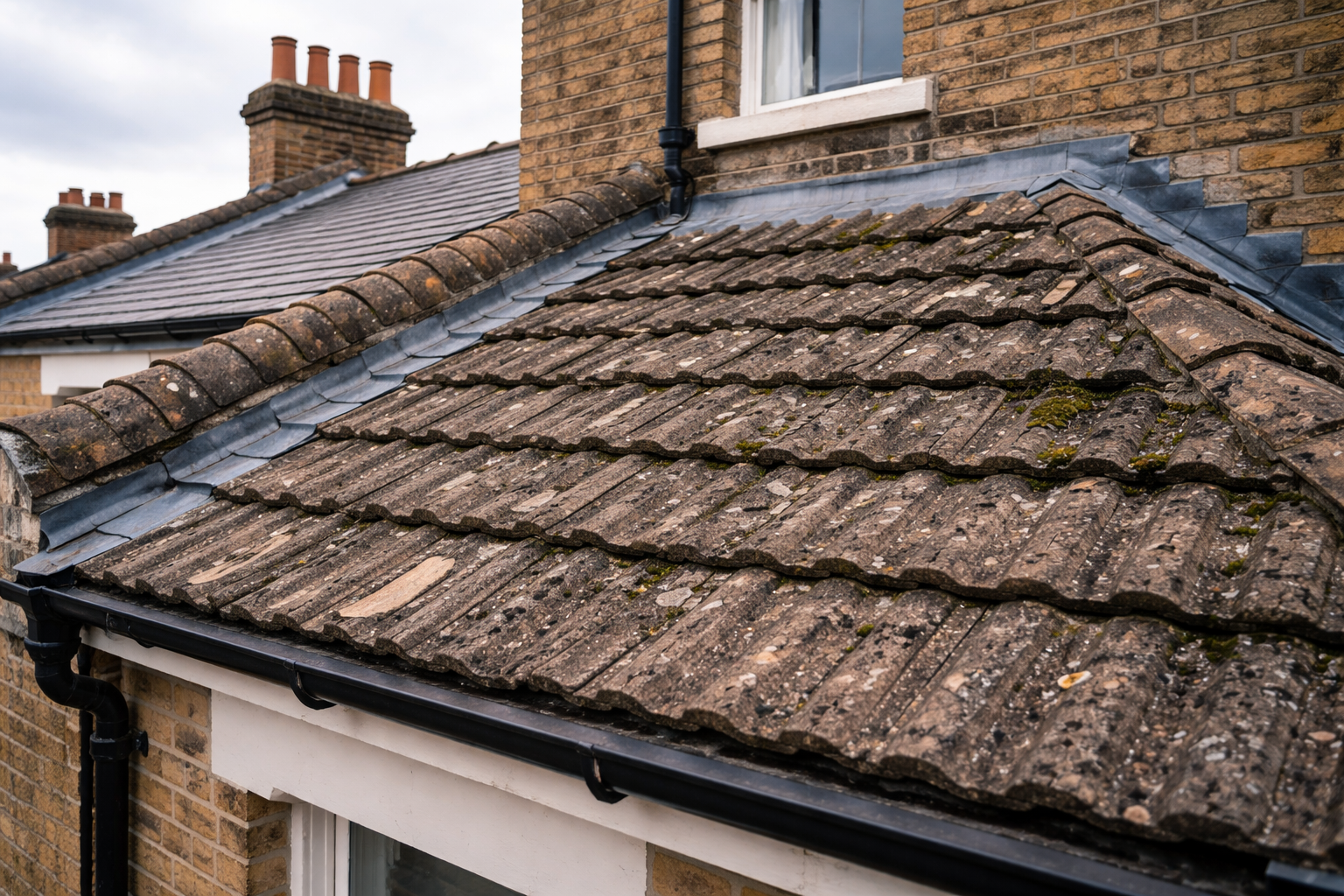
Roof defects can lead to significant repair costs if they are not identified early. Leaks, slipped coverings, failed flashings, timber decay and long term weathering can all affect the condition of a roof and, if left unresolved, may cause damage elsewhere in the building. A roof defects survey helps assess visible roof related issues and explain what they may mean in practical terms.
Bloomsbury Surveyors provides roof defect surveys in Brighton, Hove and across Sussex for homeowners, buyers, landlords, investors and commercial property clients. Our surveys help identify visible roof issues, likely causes and probable repair priorities.
For broader survey guidance, visit our Building Survey Advice Brighton hub.
What Is a Roof Defects Survey?
A roof defects survey is a professional inspection focused on the visible condition of the roof and associated elements. The aim is to identify defects, assess likely significance and provide advice on repair, maintenance or further investigation where needed.
Depending on the property and the issue, the survey may consider:
- Roof coverings
- Flashings and junctions
- Rainwater goods
- Chimneys and parapets
- Roof structure where visible
- Signs of water ingress
- Related internal symptoms
Common Signs of Roof Defects
Many roof issues become visible before major failure occurs. Common signs that may justify a roof survey include:
- Leaks or water staining internally
- Missing or slipped tiles or slates
- Damp patches to ceilings or upper walls
- Defective gutters or downpipes
- Visible sagging or distortion
- Loose flashing
- Vegetation growth or blocked outlets
If these signs are visible during a purchase, it is often sensible to investigate before exchange.
Common Roof Problems Found in Brighton Properties
Brighton and Hove contain a wide range of property types, from Regency terraces and Victorian houses to converted flats and commercial buildings. Roof issues vary according to age, maintenance history, exposure and previous repair quality.
Common defects found in local roofs include:
- Failed slates or tiles
- Defective flashings
- Blocked or leaking gutters
- Weathered roof coverings
- Timber deterioration from water ingress
- Defects around chimneys and parapets
- Poor quality patch repairs
Coastal exposure can accelerate weathering, especially on exposed elevations and older buildings.
Roof Defects in Period and Coastal Properties
Many Brighton properties are older and exposed to coastal conditions. Period roofs may have aged coverings, historic repairs and concealed deterioration that is not obvious from ground level. Wind driven rain, salt laden air and general weather exposure can all contribute to ongoing decay if maintenance has been deferred.
This makes roof inspection especially important in Brighton and Hove, particularly where the building is older or part of a converted property.
Roof Leaks and Water Ingress
One of the most common reasons for commissioning a roof defect survey is visible water ingress. Water staining, peeling decoration or damp at high level may indicate failure in the roof covering, junctions, flashings or rainwater system.
However, the internal sign is not always directly below the defect, which is why inspection needs to consider the roof as a whole rather than just the visible symptom inside.
Related reading:
Roof Structure Concerns
Some roof problems affect not only coverings but also the supporting structure. Timber decay, deflection, spread or poor historic alteration can all influence how the roof performs. In older properties, structural roof issues may contribute to internal cracking or distortion elsewhere in the building.
Where relevant, the survey may help identify whether symptoms suggest a broader structural concern.
Related pages include:
Roof Defect Surveys Before Buying Property
Roof issues can significantly affect repair cost, especially on older or larger buildings. If visible defects are present during a purchase, a roof defect survey can help buyers understand likely implications before they commit.
This can help with:
- Understanding probable repair needs
- Assessing urgency of maintenance
- Clarifying visible signs of deterioration
- Supporting negotiation where appropriate
- Reducing uncertainty before exchange
Buyer guidance pages:
Roof Defects in Flats and Converted Buildings
Roof issues in flats and converted buildings can be especially complex because responsibility may be shared through lease arrangements and service charge structures. A survey can help clarify visible building condition even where legal liability sits elsewhere.
This is often useful in Brighton, where many flats occupy older converted buildings with shared roof structures and common maintenance concerns.
Commercial Roof Defect Surveys
Commercial roofs can also develop defects that affect occupation, maintenance planning and investment value. Warehouses, retail buildings, offices and mixed-use premises may all require condition review where leaks, deterioration or structural concerns are visible.
Commercial clients often need practical advice on the likely extent of repair need and the implications for budgeting and ongoing maintenance.
What a Roof Defects Survey Can Help You Understand
A roof survey helps provide clarity on the visible condition of the roof and associated elements. It may help you understand:
- Likely source of water ingress
- Extent of visible deterioration
- Whether repairs appear minor or more significant
- Whether structural concerns may be present
- What further investigation or maintenance may be appropriate
How Bloomsbury Surveyors Can Help
Bloomsbury Surveyors provides roof defect surveys across Brighton, Hove and Sussex. We help buyers, owners and property professionals understand roof related defects more clearly so that repair planning and decision making can be based on professional evidence.
Whether the concern is a visible leak, ageing coverings, structural roof movement or general condition uncertainty, we provide clear reporting tailored to the property and the issue.
Related Building Survey Pages
- Building Survey Advice Brighton
- Damp Survey Brighton
- Structural Survey Brighton
- Property Defects Report
- Pre Purchase Survey Brighton
- Building Survey FAQs
Frequently Asked Questions
What are the signs of roof defects?
Common signs include leaks, staining, slipped coverings, defective gutters and visible deterioration.
Should I get a roof survey before buying a property?
Yes, especially if roof issues are visible or the building is older.
Can a roof survey identify the source of a leak?
It can often identify the likely source or affected area based on visible evidence.
Do you inspect roofs on Brighton period properties?
Yes. We inspect roofs on period, coastal and converted properties across Brighton and Hove.
Do you cover Sussex?
Yes. We provide roof defect survey advice across Brighton, Hove and Sussex.